





 ACCOUNT



Xymenynic acid - properties and effects - find out everything!
Contents
Xymenynic acid - properties and effects - find out everything!
It is no secret that the key to successful skincare is the right choice of active ingredients. Faced with the wealth of products available on the market, however, consumers do not have an easy task - some are based on ingredients known to the cosmetics industry for decades and thoroughly tested from every possible angle, others tempt us with technological novelties which, though still not very popular, sound just as promising. Every cosmetic, though, is the end result of a far more complicated decision-making process and of countless compromises that we, the producers, face when choosing the raw materials for our formulas. Sometimes we know perfectly well what we are looking for, other times we stumble upon a gem that turns out to be a bullseye. Today we want to explain to you why, when creating our first product for the eye area, we placed xymenynic acid at the very centre of the formulation :).
Xymenynic acid - what exactly is it?
To begin with, we would like to point out that in Polish you may come across three spelling variants of its name, which we at Ministerstwo also use interchangeably: kwas ksymenowy, ksymenynowy and xymenowy. Each of these forms is considered correct and refers to the same substance. In English, too, besides the spelling required by the EU INCI nomenclature - Xymenynic Acid - you can find the alternatives Ximenynic Acid or Santalbic Acid. That last one reveals a little more about where xymenynic acid comes from: it is a plant extract obtained from the seeds of Indian sandalwood (Santalum album), that is, the sandalwood tree.
Sandalwood trees
Indian sandalwoods are small, slow-growing trees found mainly in India, but also in Australia, Indonesia, Malaysia and the Philippines. The valuable raw material obtained from sandalwood trees is not only their seeds but also the wood itself (as a carving material) and the essential oil extracted from it (a prized and popular perfume ingredient). Exposed for that reason to excessive exploitation and at the same time to the loss of its natural habitats, Santalum album is a protected species.
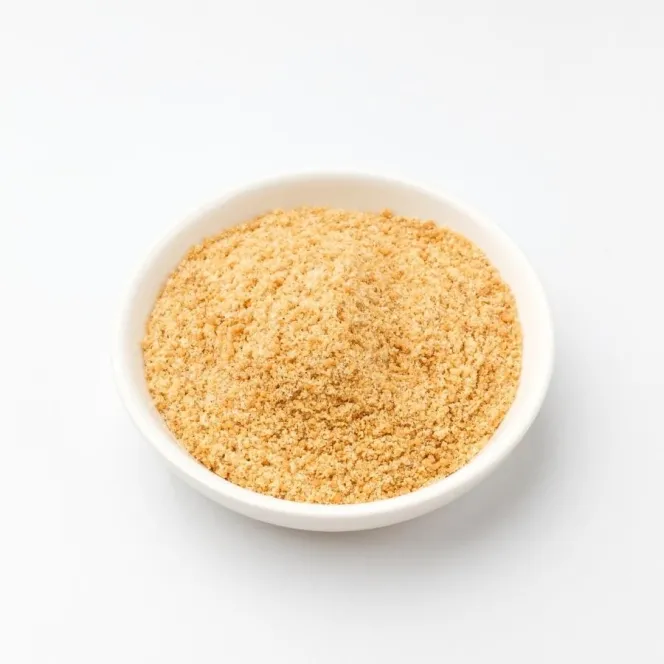
The xymenynic acid hidden in sandalwood seeds is these trees' natural weapon - it is a phytochemical compound, that is a substance produced by the plant to protect itself against harmful environmental factors such as bacteria, fungi or larvae. As a highly purified botanical extract it takes the form of a crystalline powder of a yellowish colour, although because of its unusual molecular structure it is prone to oxidation in its pure form. In order to be used as a cosmetic raw material, it is combined with stabilising substances such as caprylic/capric triglyceride (INCI: Caprylic/Capric Triglyceride) or tocopherol (vitamin E), which helps preserve not only its valuable properties but also its natural colour.
Did you know: The xymenynic acid present in Ministerstwo's Active elixir for the eye and lip area Rose-Raspberry + Xymenynic Acid is obtained from the seeds of sandalwood trees growing in the mountainous regions of southern India. All sandalwood trees in the country are the property of the Indian government, whose bodies carry out the seed harvest under strict supervision, with a view to keeping this endangered species alive.
The properties of xymenynic acid in cosmetics
We have already mentioned the role the main character of today's story plays in its natural environment. It is high time we said more about how xymenynic acid works when used in cosmetics. It is still a relatively little-known active ingredient, although the list of its merits is quite impressive - and it owes them to its high bioavailability, that is its ability to get past the horny layer of the epidermis and penetrate into the deeper layers of the skin. In vitro and in vivo studies confirm that by using cosmetics with xymenynic acid we can expect above all: an improvement in the structure of the skin, an increase in its elasticity and firmness and a strengthening of the skin's resilience, which some sources describe as reducing the effects of collagen fibre loss. And rightly so! Xymenynic acid inhibits the action of the enzymes responsible for the degradation of both collagen and hyaluronic acid (collagenase and hyaluronidase), thereby strengthening the intercellular matrix. The three-dimensional collagen and elastin scaffolding that fills it, suspended in strongly moisture-binding hyaluronic acid, gives the skin the right tension, density and resistance to damage.
(If the passage above sounds about as comprehensible to you as a quantum physics textbook, do have a look at our previous post, where we write more about collagen ;)).
The benefits of xymenynic acid do not end there, though - that is only the beginning:
- it is also a strong antioxidant - by actively neutralising free radicals, it likewise helps keep the skin looking young;
- by stimulating microcirculation it improves the oxygenation and nourishment of cells as well as their detoxification mechanisms - for this reason it is gaining popularity as an ingredient in hair care products that improve vitality, prevent excessive hair loss and stimulate the follicles to grow;
- it reduces the accumulation of fatty tissue under the skin, reducing thickened areas and minimising the visibility of cellulite (so-called "orange peel skin").
What arouses the greatest interest among researchers, however, is its anti-inflammatory action, first reported back in the 1980s. The documented link between inflammation and the formation of cancerous changes is a particular incentive to study xymenynic acid for possible anti-cancer properties.
Did you know: The firming properties of xymenynic acid were already put to use in traditional Indian medicine - Ayurvedic treatments using it were meant to give the skin smoothness, resilience and a velvety texture. Australian Aboriginal peoples, in turn, value its anti-inflammatory properties, taking sandalwood seeds orally as a remedy for joint inflammation or stiffness, and also rubbing them locally into skin lesions and burns.
Because of its multi-track elasticising, strengthening and anti-wrinkle action, xymenynic acid is used above all in anti-cellulite body care, firming bust preparations, tightening face creams and cosmetics that prevent the skin under the eyes from becoming slack.
We hope you now understand why xymenynic acid made its debut in Ministerstwo's range precisely in the composition of the Active elixir for the eye and lip area Rose-Raspberry, deserving the title role from the very start. All that is left now is for you to see how it works on your own skin :). Do give it a try!
Products from this article:
- BESTSELLER

 5.0 / 306
5.0 ( 306 RATINGS )
5.0 / 306
5.0 ( 306 RATINGS )


Similar posts

2026-10-12
Hand Cream Ingredients - What Works and What's Best Avoided?
Your expert guide to the INCI list: discover moisturising, regenerating and protective ingredients, and learn which substances are…
Read more
2026-02-20
What is the skin microbiome and why is it worth caring for its balance?
Did you know that millions of microorganisms live on your skin and look after its health and appearance every single day? This is the skin…
Read more
2025-04-24
Glycation and sugars in cosmetics - why it is better to use a sugar serum than to eat sugar?
Do you know this sweet irony? The sugar that ruins your skin from within can be its greatest ally in cosmetics! Discover the surprising…
Read more