





 ACCOUNT



Coenzyme Q10 - properties and effects - find out everything!
Contents
Coenzyme Q10 - properties and effects - find out everything!
Anyone connected with the cosmetics industry, whether professionally or as a hobby, is inclined to marvel at unusual, rarely encountered, brand new active ingredients, especially when their name or origin sounds exotic ;). Sooner or later, though, we humbly come to realise that effective skincare is impossible without substances that have been perfectly familiar for decades, researched "from every angle" and are almost omnipresent, which can unjustly seem a little worn out.
With that thought in mind, we would like to introduce you to coenzyme Q10 - an ingredient adored by cosmetics manufacturers, yet often underrated by consumers precisely because it is everywhere. We intend to change that!
Coenzymes, enzymes, vitamins...
Let us begin our story by explaining what a coenzyme actually is as a type of chemical compound: it is a small-molecule, non-protein substance that assists an enzyme, initiating or supporting its action. A coenzyme takes part in the chemical reaction that occurs under the influence of a given enzyme by attaching or donating atoms or electrons. We know this sounds very complicated at the moment - but do not worry, we will explain in a second why it is such important information :).
On a broad scale, thanks to cosmetics advertising, the word coenzyme is most often associated with today's hero, coenzyme Q10 - a type of coenzyme found naturally in the cells of fungi, plants, invertebrates and vertebrates (including, of course, humans). Because of the functions it performs, it is classed as a vitamin-like substance, and its molecular structure is sometimes compared to vitamins E and K. Like vitamins, coenzyme Q10 is essential for our body to function properly, but unlike them it does not have to be supplied from outside (exogenously). Endogenous production of coenzyme Q10 takes place in the human body - it is synthesised in our liver from the amino acids phenylalanine and tyrosine.
Calling coenzyme Q10 a substance essential to the human body clearly suggests that its role reaches far beyond skincare in cosmetic products (which we will tell you about in detail in a moment). So let us first look at the processes it takes part in and at what it provides to the cells of our body.
Coenzyme Q10 - all-powerful and omnipresent
From the point of view of vital functions, the most important task of coenzyme Q10 is its indispensable part in cellular respiration, that is in producing the energy needed for all cells to work. It is hard to disagree that this is the absolute foundation of every organism! For that very reason the largest amounts of coenzyme Q10 are found in the organs with the greatest energy demand - the heart, the brain and the liver. Here we return to the ability of coenzymes to attach atoms and electrons, which we mentioned at the beginning. Time to explain it to you more precisely and more vividly :). We have not yet mentioned that coenzyme Q10 always occurs in the body in two forms: the first is ubiquinone, the oxidised form (bound to an oxygen molecule), and the second is ubiquinol - the reduced form, in a sense "looking for" an oxygen molecule to bind with. Most importantly, these two forms are constantly converting into one another, alternately giving up and taking on oxygen (in chemical jargon we call this a reversible oxidation-reduction reaction).
The energy metabolism of cells takes place in the mitochondria, where fatty acids and glucose are converted into adenosine triphosphate (ATP), that is cellular energy. A key role in this process is played by ubiquinone, which is responsible for transporting electrons in what is known as the respiratory chain. The ability of ubiquinol to bind with an oxygen molecule, in turn, makes it a powerful antioxidant - in this way it neutralises free radicals (which are nothing other than oxygen atoms "up for grabs") that arise as a by-product of this process. So by combining the abilities of its two forms, coenzyme Q10 is responsible both for the speed and efficiency of energy production and for protecting the mitochondria from its side effects.
Although this is its most important function, it is not the only one - the action of coenzyme Q10 is decidedly multi-track:
- Thanks to its antioxidant properties it prevents damage to lipids, proteins and DNA caused by oxidation, and so slows down the ageing of cells. It also regenerates molecules of another powerful antioxidant, α-tocopherol - vitamin E - reducing them from the oxidised form back to the biologically active one. In this way it also contributes indirectly to fighting free radicals in the body.
- It stabilises cell membranes, giving cells resistance to the loss of water and of potassium, calcium and magnesium ions.
- It takes part in cell signalling and gene expression.
- It improves circulation, prevents tissue hypoxia and stimulates the immune system.
- It takes part in many metabolic processes, helping to detoxify cells.
Did you know: The name ubiquinone combines a reference to the chemical structure of the coenzyme Q10 molecule (quinone - a ring compound) and to its common occurrence in the tissues of many living organisms (the Latin word ubitarius - omnipresent).
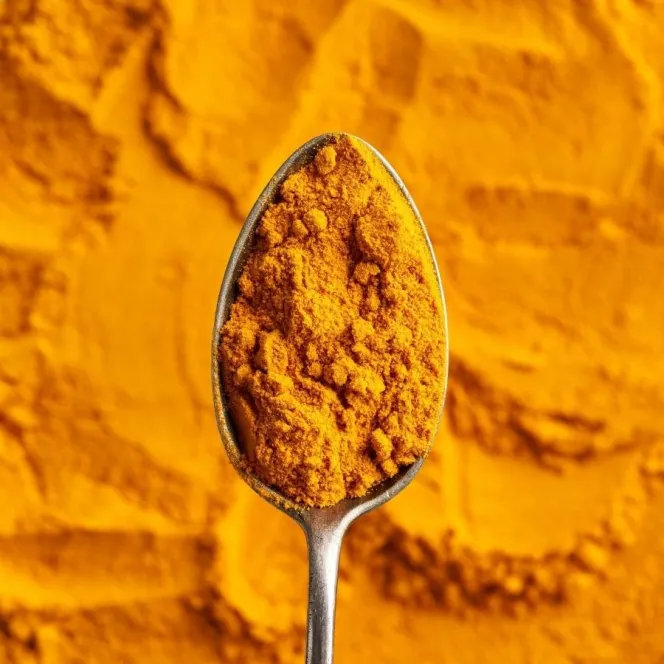
Faced with such a list of merits, it is hard to have any doubts about the essential role of coenzyme Q10 in human life. Unfortunately, its amount in our organs peaks at around the age of 20 and then declines with age. For this reason it is sometimes called a "biomarker of ageing". Its biosynthesis is reduced not only by the passing of time, but also by mental and physical strain on the body, which is why the concentration of ubiquinone in our body usually drops below the optimum after the age of thirty. The coenzyme Q10 content in the body of an eighty-year-old may even be lower than at the moment of birth! Its deficiency is linked above all with reduced production of cellular energy, changes in the composition and function of cell membrane lipids and excessive formation of free radicals, which leads to cell damage through oxidation and to mitochondrial dysfunction. These changes can result in disorders of the circulatory and nervous systems, as well as accelerated skin ageing - excessive dryness, loss of firmness, the formation of wrinkles or pigmentation disorders. Fortunately, we can make up for coenzyme Q10 deficiencies, depending on our needs, with a properly balanced diet, with supplements or by applying it externally in cosmetics. For pharmaceutical and cosmetic use, coenzyme Q10 is most often obtained by extraction from its natural sources, such as algae, or by chemical synthesis, usually with the help of yeast or bacteria - it then takes the form of a yellow or orange crystalline powder with no particular taste or smell. It is also possible to extract ubiquinone from beef hearts, from which it was in fact isolated for the very first time back in 1959. Although in this form it is best absorbed by the human body, as an animal product it is not without controversy.
Did you know: Although coenzyme Q10 was discovered in the 1950s in the United States, a method of synthesising it on a large scale was only developed a dozen or so years later by Japanese scientists. The greatest contribution to understanding its importance and its mechanism of action in the human body was made by the British researcher Peter Mitchell, for which he was awarded the Nobel Prize in Chemistry in 1978.
Among foods, the highest ubiquinone content is found above all in offal - liver or pork and beef hearts - as organs with the greatest energy demand, and in meat in general. Rich sources of coenzyme Q10 also include:
- fish: sardines, tuna, herring and mackerel,
- vegetable oils, especially soybean, corn, sunflower and olive oil,
- peanuts, sesame seeds and pistachios.
Among fruit and vegetables with a relatively high content, spinach, avocado, broccoli and parsley are mentioned, especially when eaten raw and not heat-treated. Because coenzyme Q10 is fat-soluble, it is recommended to supplement it in the form of capsules filled with soy lecithin, taken directly after a meal.
Did you know: The richest dietary source of coenzyme Q10 is widely considered to be... reindeer heart.
Ubiquinone in skincare
The skin, as the organ that forms the protective barrier of our body and is in constant contact with both the external and the internal environment, is particularly exposed to the harmful effects of free radicals. Formed under the influence of sunlight, air pollution or inflammation developing in the body, free radicals destroy both the lipid membranes and DNA of skin cells and the supporting fibres responsible for its structure. To be able to effectively carry out the repair and regeneration of damaged tissue, skin cells need well-functioning mitochondria producing the right amount of energy. This constant need for effective antioxidant protection, as well as for the "fuel" essential for cells to work properly, makes coenzyme Q10 an exceptionally valuable skincare ingredient.
As a cosmetic raw material, coenzyme Q10 is an extremely safe substance, completely non-toxic, well absorbed and well tolerated by the body. Scientific studies show that coenzyme Q10 applied topically to the skin, after just a few weeks of regular use, helps to smooth fine lines, significantly improves firmness, elasticity and hydration and brightens discolouration:
- penetrating the lipid layer of the epidermis, it makes up for age-related deficiencies and strengthens its protective barrier, increasing resistance to oxidative stress caused by environmental factors;
- through its antioxidant action it slows down skin ageing - both the kind resulting from the passing of time (chronological ageing) and the kind caused by inflammation triggered by UV radiation (photoageing);
- by stimulating the energy metabolism of skin cells it speeds up the processes of biological renewal, repair and regeneration, and supports the maturing of new collagen and elastin fibres;
- it increases the synthesis of hyaluronic acid and inhibits the activity of collagenase - the enzyme responsible for breaking down collagen fibres - improving the firmness and elasticity of the skin and making wrinkles shallower;
- it also blocks the activity of tyrosinase - an enzyme activated by UV radiation that plays an important part in the synthesis of melanin, the pigment of our skin. In this way it has a brightening effect and prevents the formation of sun-induced discolouration.
To sum up, we can safely say that coenzyme Q10 as a cosmetic ingredient gives the skin multi-track anti-ageing support - by fighting free radicals, reducing the inflammation caused by oxidative stress and inhibiting the activity of collagenase, it prevents the degradation of existing supporting fibres and provides the energy skin cells need to synthesise new ones. That is why it is widely used in anti-wrinkle and "anti-aging" products for the face and eye area, as well as in cosmetics with sunscreen and those intended for after-sun care.
Coenzyme Q10 in the cosmetics of Ministerstwo Dobrego Mydła
To strengthen the action of coenzyme Q10, cosmetic formulas often combine it with vitamins A, C and E, which have equally strong antioxidant, brightening and firming properties. Products with coenzyme Q10 and vitamins are therefore an excellent choice in daily care aimed both at preventing ageing and at reducing signs of skin ageing that have already appeared. We used this comprehensive combination of active ingredients when creating our products from the Rose-Raspberry series, prepared especially with dry, mature, dull skin in mind, skin that has lost its bounce and glow. You can therefore benefit from the valuable properties of coenzyme Q10 every day by using, as needed:
- The super-nourishing face cream Rose-Raspberry Jam
- The Rose-Raspberry face serum,
- The active elixir for the eye and lip area Rose-Raspberry + Ximenynic Acid.
Did you know: The ubiquinone present in Ministerstwo cosmetics (INCI: Ubiquinone) is a vegan raw material - obtained in the laboratory by synthesis involving bacterial cultures, or more precisely, by the bacterial fermentation of a specially prepared mixture of glucose, corn powder and monosodium glutamate.
Products from this article:
- BESTSELLER

 4.8 / 274
4.8 ( 274 RATINGS )
4.8 / 274
4.8 ( 274 RATINGS )

- BESTSELLER


Similar posts

2026-10-12
Hand Cream Ingredients - What Works and What's Best Avoided?
Your expert guide to the INCI list: discover moisturising, regenerating and protective ingredients, and learn which substances are…
Read more
2026-02-20
What is the skin microbiome and why is it worth caring for its balance?
Did you know that millions of microorganisms live on your skin and look after its health and appearance every single day? This is the skin…
Read more
2025-04-24
Glycation and sugars in cosmetics - why it is better to use a sugar serum than to eat sugar?
Do you know this sweet irony? The sugar that ruins your skin from within can be its greatest ally in cosmetics! Discover the surprising…
Read more