





 ACCOUNT



Collagen in the skin - what is it and what are its properties?
Contents
- Collagen - the skin's natural scaffolding
- What is collagen?
- Collagen goes by many names
- The three musketeers of healthy skin
- Nothing lasts forever, or when our collagen starts to run out...
- What changes take place in our body as we lose collagen?
- It is not all down to your birth certificate - what else affects the drop in collagen levels in the skin?
- Applying collagen to the skin
- Time for an action plan - we stimulate fibroblast activity and supply the skin with antioxidants
- Even more ways to boost collagen production in the skin
- Getting collagen production going
- The way to the... fibroblasts is through the stomach
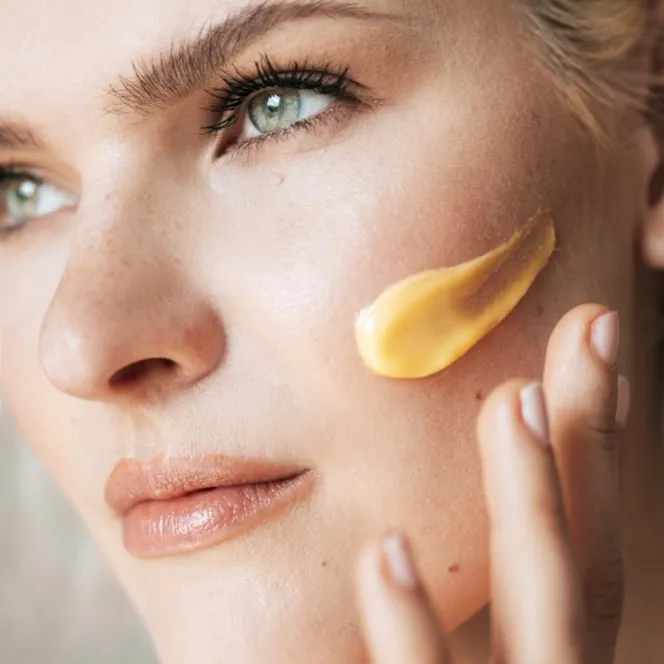
Collagen - the skin's natural scaffolding
If you have ever had the chance to be in touch with us in person, you know (we hope!) that we take particular care to share our knowledge and experience with you in the most accessible way possible. Being on the other side, we quickly learn which pieces of information matter most to our customers and interest them the most... and that one particular phrase stands out among them all. A phrase of exceptional power - one that instantly raises an eyebrow and brings out that characteristic sparkle in the eye which tells us without a word "I am all ears!". The secret password is... It has an anti-wrinkle effect ;). Sooner or later this is exactly the property that becomes number one among the things we expect from cosmetics. Today we will tell you a little more about why wrinkles appear in our lives at all and what we can do about it - but before we get to that, we need to introduce you to someone properly. Meet the hero of this story: collagen!
What is collagen?
Collagen is a fibrillar structural protein found widely throughout the human body - or, put more simply, collagen molecules form fibres that serve as the building material of our tissues. It is the main component of the intercellular substance: it is present in our bones, cartilage, tendons and ligaments, teeth, blood vessels and the cornea of the eye, as well as in the skin and hair. Natural collagen is produced in specialised cells called fibroblasts - among the most numerous cells of connective tissue.
Did you know: Collagen is the most abundant protein in the human body - it makes up around 25% of the total mass of all proteins in the human organism!
Collagen goes by many names
When we say that collagen is a protein, we are simplifying things considerably - what we call collagen is in fact an entire group (or family) of proteins. There are as many as 28 types of collagen in our body, distinguished on the basis of significant structural and functional differences and numbered in sequence with Roman numerals. Type I collagen, for example, is the dominant form in human skin - it accounts for around 85-90% of the collagen fibres it contains, interwoven with type III collagen fibres, which make up the remaining 10-15%. Collagen II, in turn, is the main component of cartilage and for that reason is known especially among professional athletes and injured amateurs as collagen for the joints ;). Such a wide variety of collagen types stems from its downright impressive versatility in the human body. Let us take a closer look at what it is responsible for!
The word collagen itself comes from the Greek kolla, meaning glue. The basic task of collagen fibres is to form an ordered network that binds cells together, ensuring the integrity of tissues. This collagen scaffolding gives tissues mechanical strength and resistance to stretching, thanks to which they can temporarily deform under pressure without being damaged, and our internal organs can continue to perform their functions properly. And that is not all!
Collagen plays a significant role in the healthy appearance and functioning of our skin - it binds the connective tissue of the dermis with the epithelial tissue of the epidermis, thereby co-creating the body's protective barrier, it helps the skin maintain resilience, elasticity and hydration, ensures the continuity of cell renewal, takes an active part in wound healing... No wonder the dermis consists of as much as 70-85% collagen, and that is where there is more of it than anywhere else in the body. Versatile as it is, however, our "biological glue" does not work alone.
The three musketeers of healthy skin
Let us return for a moment to fibroblasts, our collagen factories - you should know that they are exceptionally productive! Inside them, collagen is created in parallel with hyaluronic acid and elastin - another kind of supporting protein whose fibres also form a three-dimensional mesh.
Collagen and elastin structures can bind closely with one another, and as a duo they not only give the skin greater resilience and mechanical strength, but also protect each other's fibres from excessive stretching. The spaces between them are filled with a fluid, somewhat gel-like substance rich in hyaluronic acid, which is capable of binding water in an amount over a thousand times (!) its own weight. In this way the synergy of collagen, elastin and hyaluronic acid gives the skin the right tension and proper hydration, providing density, firmness and resistance to damage - while we enjoy a youthful look and joyfully cry out: long live the fibroblasts!
Did you know: Unlike collagen, which occurs in many different types, elastin is a single kind of protein with a defined structure.
Did you know: Although collagen is around 20 times more resistant to mechanical injury, elastin is in turn 300 times more elastic, which makes it far more resistant to stretching. Elastin fibres can freely stretch to as much as 200% of their length without damage to their molecular structure, and then... return to their original form! No wonder the structure of elastin is compared to a spring or a rubber band ;).
Nothing lasts forever, or when our collagen starts to run out...
Forgive us for dampening the enthusiasm so abruptly after all this admiration. Collagen, though, is a bit like the homeland in the old poem - you only learn how much it is to be treasured once you begin to lose it... And unfortunately we all lose it with age. The collagen content in the body starts slowly declining once we turn 25, which is why collagen is sometimes called the protein of youth ;). Up to that point fibroblasts work intensively on constantly replacing collagen fibres with new ones, producing as much as around 3 kilograms of it a year.
As time passes, not only does the number of fibroblasts decrease, but so does their level of activity, which translates into a drop in the amount of synthesised hyaluronic acid and supporting fibres (particularly type III collagen), as well as a decline in their quality. Collagen and elastin fibres are distributed irregularly, become shorter, thinner, harder and stiffer, and therefore less elastic. It is estimated that collagen loss amounts to around 1% a year, although the process is decidedly slower in the early years and accelerates with each decade. By the time we reach retirement age, we may have as much as 45% less collagen than in our youth!
What changes take place in our body as we lose collagen?
The face
The first thing we usually notice is a decline in the condition of the skin: it loses firmness and hydration, wrinkles and furrows begin to appear, and the oval of the face changes. The skin may also deform more easily and need more time to return to its original form - you can see this every morning in the bedding marks pressed into the body.
The body, the hair
The weakening of skin elasticity and the changes in its structure become clearly visible around the age of 40. The loss of the collagen scaffolding can also be seen on the skin of the body, which becomes more slack (particularly on the arms and thighs). Collagen also has an influence on the hair - it supplies the follicles with amino acids that provide nourishment and proper hair growth. Its deficiency therefore contributes to excessive hair loss, with the hair becoming weakened, thin, brittle and dry.
The joints
Apart from the changes that worry us mainly for aesthetic reasons, significant functional changes also occur in the connective tissue - wound healing slows down, bones weaken, joints become less durable, which can be accompanied by a stiffness not felt before or by so-called clicking, as well as increased susceptibility to friction and injury.
It is not all down to your birth certificate - what else affects the drop in collagen levels in the skin?
Although every process taking place in our body is genetically programmed, its course is influenced by a whole range of internal and external factors - including some that remain within our control. It is no different with the activity of fibroblasts, which are constantly subject to the influence of the hormonal balance (especially oestrogens) or of proteins called cytokines, which initiate inflammation. Unfortunately, we cannot put the loss of supporting fibres entirely on the shoulders of passing time. Our own lifestyle plays a huge, and even more significant, role! So let us take a look at what destroys collagen in the body.
The causes behind the accelerated breakdown of collagen fibres include, among others:
- solar radiation (especially UVA and infrared),
- stress,
- lack of sleep and poor sleep quality,
- smoking cigarettes and drinking alcohol,
- air pollution and contact with toxins,
- temperatures that are too high or too low,
- an improper, unbalanced diet - especially vitamin C deficiencies, excessive sugar intake, a menu poor in antioxidants.
Some of them act indirectly, by generating free radicals in the body or stimulating the production of protein-degrading enzymes, others directly damage existing collagen fibres (for example sugars, which coat them in the process of glycation and rob them of their resilience, or cortisol, known as the stress hormone), and still others disrupt the synthesis of new fibres - such as a deficiency of vitamin C, which takes an active part in the stage of linking the amino acids that build collagen molecules. So if we care about keeping our skin looking young for as long as possible, it is worth examining our conscience and revising some of our habits ;).
We do have good news for you, though - although we cannot repair damaged collagen fibres and can only take care to lead a lifestyle that will not deepen the problem, we fortunately also have the possibility of stimulating fibroblasts to produce new collagen, working both from the inside and from the outside. Can cosmetics with collagen in their composition help us with this?
Did you know: Fibroblasts are responsible not only for producing collagen but also for breaking it down - they synthesise special enzymes called collagenases, which have the ability to cut peptide bonds in the complicated structure of collagen molecules. Synthesis and degradation of collagen are processes that take place in fibroblasts constantly, in the right proportions, so that our connective tissue keeps its proper functions. Collagenases, however, belong to a group of enzymes called MMPs, whose activity increases under the influence of UV radiation, thus leading to excessive breakdown of collagen fibres - the phenomenon of photoageing. In skin exposed to sun damage the total collagen content can be as much as 20% lower!
Applying collagen to the skin
We wish it were that simple :). Unfortunately, the hydrolysed collagen contained in face creams or serums does not replenish the loss of natural collagen in the skin. Collagen molecules have the form of a triple helix, that is three chains twisted together, each of them made up of around a hundred amino acids. This makes them relatively large in size and molecular weight - even ten times too large to penetrate the epidermis into the deeper layers of the skin. They do, however, form a film on its surface, and that film has valuable properties we cannot deny! Acting occlusively, it seals the epidermis and prevents transepidermal water loss (evaporation), thereby indirectly moisturising and softening the skin. It also gives that desirable feeling of smoothed and tightened skin, although this effect lasts only until the cosmetic is washed off. Used in hair cosmetics, collagen has a smoothing and antistatic effect, reducing static. Collagen hydrolysate can also be responsible for other properties of a cosmetic: by binding moisture it prevents the product from drying out, but it also makes it stickier and tackier, while in cleansing products it reduces the amount of lather produced and limits the potential irritating effect of surfactants (such as SLS).
We prefer, however, to focus on a different question - which cosmetic ingredients can we use to look after our fibroblasts and stimulate the natural production of collagen? Now that is our department!
Did you know: As biotechnology develops, cosmetic raw materials with biologically active collagen, capable of penetrating the structure of the skin, are appearing on the market. One example is native collagen (known as hydrate), patented by Polish scientists, as well as lyophilised collagen, microcollagen or atelocollagen. Because of the costly production process, however, these are used above all in specialist professional preparations - the last of them is applied, for instance, in aesthetic medicine as a filler for wrinkles or lips, and as an active ingredient in needle mesotherapy treatments. So if you were to ask us which collagen to choose for wrinkles, our answer would be: the one applied under the skin ;). Administered in this form, it really does have the ability to stimulate fibroblasts to produce collagen fibres.
Time for an action plan - we stimulate fibroblast activity and supply the skin with antioxidants
Let us start by formulating a basic principle: if we want our skin to stay firm, elastic and smooth for as long as possible, with the signs of its natural ageing as little visible as possible, the most important role of daily care will be PREVENTION. Allow us to remind you that collagen loss affects every one of us from the age of 25 - long before the average consumer starts taking an interest in ways of dealing with wrinkles that already exist, instead of preventing them in good time.
Among preventive measures we can distinguish three main tasks:
- We protect the skin from solar radiation - we do not encourage collagenases to get to work and we do not swell the ranks of free radicals,
- We supply the skin with antioxidants - bravely standing up to the free radicals already lying in wait for our collagen fibres,
3.We stimulate our fibroblasts - we do not let them get lazy ;).
With the cosmetics of Ministerstwo you can easily carry out points 2 and 3 of the plan above (and we hope that the time will come for point 1 as well!). Our formulas hold a whole range of valuable active ingredients waiting for you:
- vitamin C (INCI: Ascorbyl Tetraisopalmitate, 3-O-Ethyl Ascorbic Acid) - an indispensable element of the collagen synthesis process, it stimulates fibroblast activity and at the same time protects collagen fibres, working in several ways at once. It supports the reduction of inflammation, helps heal minor wounds and irritations, and as a strong antioxidant it effectively fights free radicals.
- the active form of vitamin A (INCI: Hydrogenated Retinol) - regulates cell renewal processes, has a regenerating effect and evens out skin tone. It stimulates the production of collagen and hyaluronic acid in the skin, improving its hydration, plumpness and firmness. As an antioxidant it neutralises free radicals, preventing the degradation of collagen fibres.
- niacinamide (vitamin B3/vitamin PP; INCI: Niacynamide) - with its antioxidant action it prevents premature skin ageing. Thanks to its ability to stimulate fibroblasts to produce collagen and elastin, it increases the firmness and elasticity of the skin and reduces fine wrinkles.
- xymenynic acid (also written ximenynic, santalbic; INCI: Xymenynic Acid) - has strong antioxidant properties and inhibits the activity of collagenases (the enzymes responsible for breaking down collagen fibres), thereby helping to improve the tone and elasticity of the skin.
- vitamin E (INCI: Tocopherol) - strengthens the epidermal barrier, has an elasticising and anti-inflammatory effect and protects the skin from free radicals.
- coenzyme Q10 (INCI: Ubiquinone) - neutralises free radicals and slows down skin ageing processes.
Let us now look at how the synergy of their action translates into the properties of Ministerstwo's products and the effects of using them in a daily care routine. The undisputed leaders in anti-wrinkle care are the cosmetics from the Rose-Raspberry line:
- Super-nourishing face cream Rose-Raspberry Jam - after 4 weeks of regular use the skin becomes up to 32% smoother, its elasticity level rises by 10%, and the length and depth of wrinkles decrease by up to 19% and up to 16% respectively. Applying the cream improves the overall appearance of the skin and gives a feeling of smoothness and firmness.
- Rose-Raspberry face serum - thanks to regular application of the serum the skin becomes firmer, more elastic and smoother, and wrinkles are less visible. 28 days of regular use means up to 12% more elasticity, 19% more firmness and 12% more smoothness!
- Active elixir for the eye and lip area Rose-Raspberry + Xymenynic Acid - used regularly for 4 weeks it increases the smoothness of the skin around the eyes by 9.6%, and elasticity and firmness by 8.6%. If we extend that period to 8 weeks, the elixir smooths the skin by 12.3% and increases its firmness and elasticity by 10%! The skin is noticeably firmer and more resilient, and the depth of wrinkles decreases by up to 9.2%.
Not one bit behind them is the Hydromineral face cream H2O with niacinamide and vitamin E - right after application it leaves a distinct feeling of nourished, firmed and more elastic skin. After 4 weeks of regular use the skin becomes smoother and wrinkles less visible.
Even more ways to boost collagen production in the skin
If there are some among you who are determined to do as much as possible for their fibroblasts, we have to mention two additional solutions. Do bear in mind, though, that they will not replace a healthy lifestyle or proper care - they will, however, be an excellent complement to both.
Getting collagen production going
Right at the beginning we established that the main task of collagen in our skin is to provide elasticity and strength. That does not mean, however, that we can put the skin through a hard test without consequences! Besides daily care, it is worth paying attention to the habits that affect it mechanically.
Firstly, it is best to treat the skin gently - let us not rub it with a towel or pull it in different directions while removing make-up. Let us notice whether the way we hold our body during everyday activities encourages it to deform in particular areas, for example when we sit with a cheek propped on the hand, or constantly furrow the brow in a grimace of displeasure ;). Secondly, let us treat the facial muscles the way we treat the muscles of the whole body - they too may need relaxation, improved mobility or exercise. The advantages of regular facial massage and facial muscle training are many: it improves circulation, reduces swelling, releases tension, gently exfoliates the epidermis, smooths, softens wrinkles, improves the oval of the face... And, what matters most to you at this moment, it stimulates the production of collagen and elastin :).
Did you know: If you would like to work on improving the appearance of your face properly and effectively, devoting even just a few minutes a day to it, we warmly encourage you to get to know our sister brand Facegroovin'. We have prepared our own mobile app for daily exercises for you, as well as a massage studio in Warsaw where our specialists will make sure your fibroblasts get to work :).
The way to the... fibroblasts is through the stomach
In recent years, alongside the cosmetics industry, the dietary supplement industry has also been developing rapidly. During that time, along with the secrets of Asian skincare, the Asian trend of taking collagen-based preparations orally for beauty reached Poland as well - until then they had been used mainly in the prevention of joint disorders. Consumers can choose from a wide range of collagen "beauty" products in various forms - on the market you will find collagen in liquid or powder form intended for drinking, or collagen in tablets. Most often they are based on highly absorbable hydrolysates (collagen peptides) of fish collagen, rich in type I collagen - the main building block of our skin. Another popular practice is to offer supplements combining marine collagen with vitamin C. Their effectiveness, however, is a controversial subject of debate and requires confirmation through broader scientific research.
To close, though, we will say it once more - even the best chosen supplementation will not replace a healthy lifestyle and proper eating habits. If you want to ensure the well-being of your fibroblasts, we recommend above all keeping the body properly hydrated, eating products rich in antioxidants (especially vitamin C) and reducing sugar intake :).
Did you know: People struggling with joint problems are often advised to eat products containing gelatine or long-simmered broths made from pork or beef bones. This is because they are rich in collagen. Since, however, as we mentioned, collagen molecules are large and heavy, our digestive system does not absorb them whole but digests them into amino acids. It is therefore hard to judge how much collagen we are really getting while happily eating jelly or gummy sweets ;).
Products from this article:

 4.8 / 218
4.8 ( 218 RATINGS )
4.8 / 218
4.8 ( 218 RATINGS )

- BESTSELLER

- BESTSELLER


Similar posts

2026-10-12
Hand Cream Ingredients - What Works and What's Best Avoided?
Your expert guide to the INCI list: discover moisturising, regenerating and protective ingredients, and learn which substances are…
Read more
2026-02-20
What is the skin microbiome and why is it worth caring for its balance?
Did you know that millions of microorganisms live on your skin and look after its health and appearance every single day? This is the skin…
Read more
2025-04-24
Glycation and sugars in cosmetics - why it is better to use a sugar serum than to eat sugar?
Do you know this sweet irony? The sugar that ruins your skin from within can be its greatest ally in cosmetics! Discover the surprising…
Read more