





 ACCOUNT



Sugars in cosmetics - properties and effects
Contents
Sugars in cosmetics - properties and effects
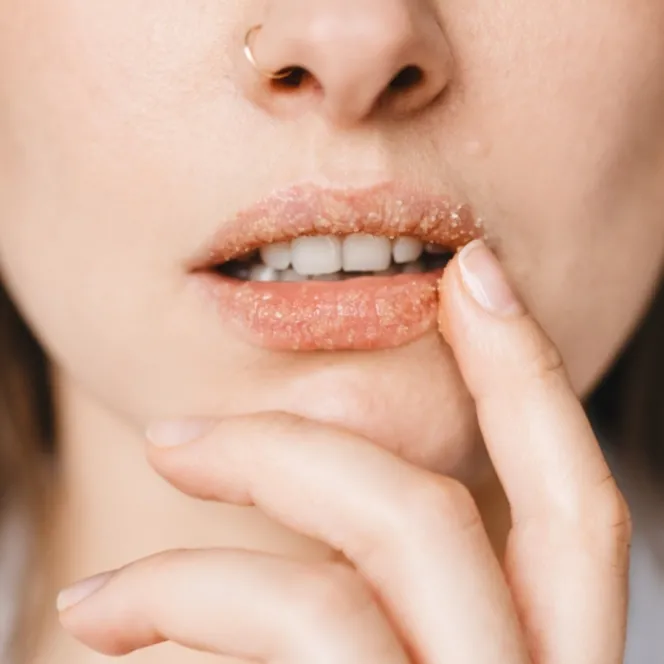
It is no secret that proper everyday skin care goes beyond hygiene and cosmetics alone. Just as important is our lifestyle as a whole - a proper diet, good hydration, exercise, sleep and avoiding addictions. One of the key nutrition rules for healthy skin is moderate sugar intake: in excess, sugar can not only aggravate acne and promote inflammation, but also accelerate skin ageing through the so-called glycation of proteins, i.e. the degradation of collagen and elastin fibres. Paradoxically, things look completely different when we deliver it to the skin... from the outside. How is it possible that sugar in cosmetics does us good?
Not all sugars are created equal
The word "sugar" covers a very complex group of chemical compounds, formally known as saccharides or carbohydrates. While an excess of them in the diet is not advisable, a deficiency is no better an idea - carbohydrates are essential to life! They are the most important source of energy for the human body.
Depending on their molecular structure, saccharides are divided into:
- monosaccharides, known as simple sugars, consisting of just one molecule - these include glucose and fructose,
- disaccharides, or double sugars, composed of two identical or different molecules, such as sucrose or trehalose,
- oligosaccharides - complex sugars combining from 2 to 10 monosaccharides (so disaccharides belong here too),
- polysaccharides - complex sugars built of 10 or more (even thousands!) monosaccharide molecules, e.g. cellulose, starch, hyaluronic acid or glycogen.
Regardless of their structure, sugars have one very valuable physical property: hygroscopicity, i.e. the ability to bind water molecules. This quality, highly desirable in cosmetic ingredients, classifies sugars as humectants - substances with a strong moisturising effect: they retain moisture in the epidermis and limit its evaporation, having a positive effect on skin elasticity. Sugar alcohols, also known as polyols, work the same way - these include inositol, sorbitol and xylitol, which you may know better as sweeteners :) In cosmetic formulas, sugars and their derivatives also prevent the product from crystallising and drying out at the opening of the packaging, and in lip products they provide the desired sweet taste.
The skin care properties of sugars
Some saccharides stand out with a number of additional care properties worth a closer look. Glucose (INCI: Glucose) is a popular ingredient in hair care products - showing an affinity for keratin, the building protein of hair, it smooths the strands and prevents split ends. Sucrose, composed of a fructose and a glucose molecule, is in its crystalline form the most popular base ingredient of mechanical body scrubs, acting as the so-called abrasive - the substance that exfoliates dead epidermal cells and is responsible for smoothing the skin. Yes, sucrose is nothing other than the table sugar we all know, obtained from sugar beets or sugar cane ;) Under the English name Sucrose you will of course find it in the INCI list of our nourishing Plum sugar scrub.
One of the most interesting sugars used in cosmetics is trehalose (INCI: Trehalose) - also a disaccharide, but built of two identical glucose molecules. Although it is produced by many living organisms, including fungi, insects and selected plant species, mammals unfortunately cannot synthesise it. It is what allows desert plants to survive drought - it is not only a humectant but also a powerful antioxidant, effectively protecting them from dehydration and the effects of UV radiation. Delivered to our skin as a cosmetic ingredient, it mimics the sugars present in the NMF (natural moisturising factor), storing moisture and releasing it gradually. In addition, trehalose molecules form systems that protect the skin's cellular structures from damage and prevent the dehydration of fibroblasts, which are responsible for producing collagen, elastin and hyaluronic acid in the dermis. Thanks to this, trehalose has an anti-ageing effect, helps smooth fine lines, improves skin elasticity and firmness, and reduces the unpleasant feeling of tightness while soothing skin irritation.
The hyaluronic acid mentioned above and its derivatives also belong to the sugar family - they are polysaccharides composed of thousands of linked disaccharides. Although they occur naturally in our skin, they are also obtained biotechnologically, being among the most widely used cosmetic ingredients with moisturising, softening and skin-regenerating properties. Depending on its molecular weight, hyaluronic acid works deep in the skin or on its surface - smaller molecules penetrate the epidermis, while larger ones form a delicate film on it that limits moisture loss and makes the skin smooth to the touch. In Ministerstwo cosmetics we use sodium hyaluronate (INCI: Sodium Hyaluronate), the sodium salt of hyaluronic acid, in two different molecule sizes: the low-molecular one is present in our nourishing Saffron body butter bar, and the medium-molecular one - in the Sugar water-based hydrating serum.
Fun fact: the strongly hygroscopic properties of trehalose and sodium hyaluronate are also used in eye drops - by maintaining the right level of hydration, they protect the surface of the eyes from drying out and prevent irritation.
Another popular polysaccharide used in skin and hair care formulas is inulin (INCI: Inulin) - a polymer of fructose and glucose, obtained from chicory root (or, less often, Jerusalem artichoke). Inulin has a whole range of properties: it conditions skin and hair, leaving them pleasantly smooth to the touch and adding shine, and it works as an antioxidant, an anti-inflammatory and a soothing agent. You can feel inulin's strongly smoothing effect on your own skin and hair by using our Halva cleansing and exfoliating paste and the Milk-Honey-Oat and Green Tea shampoo bars. Inulin is also a prebiotic - it helps strengthen the skin's microbiome, reinforcing its protective barrier and increasing its resistance to external factors. Prebiotics also include fructooligosaccharides (INCI: Fructooligosaccharides) obtained from sugar beets, present in our natural Apricot face cleansing foam and the Honey lip balm-mask. And while we are on the subject of our little Honey - its incredibly nourishing, intensely lip-hydrating formula contains a saccharide isomerate built of glucose and fructose (INCI: Saccharide Isomerate), commonly known in the cosmetics industry as Pentavitin. Forgive us the boldness, but we have to say it - this one is a real gem! Pentavitin moisturises the skin instantly and long-term, maintaining hydration for up to 72 hours. It brings comfort to the skin, reduces the feeling of tightness, redness, flaking and itching, and ensures softness and smoothness. And as if that were not enough, it regulates sebum production and works against wrinkles ;) This admirable effectiveness of saccharide isomerate comes from its ability to bind with keratin, which makes up the stratum corneum of our epidermis - its molecules do not wash off the skin's surface and are only removed through the natural exfoliation of the epidermis. Not only your lips can benefit, but also your entire face, neck and décolletage - saccharide isomerate is also found in the H2O hydromineral face cream!
We have saved the best news for last :) The true power of sugars, as the name itself suggests, lies in our youngest addition (already mentioned above) - the Sugar water-based hydrating serum. Apart from medium-molecular sodium hyaluronate, the sugar serum combines an advanced complex of trehalose, sucrose, fructose, glucose and inositol, working in synergy for effective hydration, nourishment and strengthening of our skin's protective barrier. The combination of glucose, fructose and sucrose nourishes skin cells, while trehalose together with inositol protects against dehydration. The whole formula has been shown in in vitro studies to limit stress-induced damage to the skin's cellular DNA. Impressive, right?
That is all about sugars - and there will be more about Ministerstwo's Sugar soon! Though, of course, we encourage you to get to know it in person right away - Sugar - Water-based hydrating serum ;)
Products from this article:
- New

 4.6 / 18
4.6 ( 18 RATINGS )
4.6 / 18
4.6 ( 18 RATINGS )

- Out of stock

- BESTSELLER


Similar posts

2026-10-12
Hand Cream Ingredients - What Works and What's Best Avoided?
Your expert guide to the INCI list: discover moisturising, regenerating and protective ingredients, and learn which substances are…
Read more
2026-02-20
What is the skin microbiome and why is it worth caring for its balance?
Did you know that millions of microorganisms live on your skin and look after its health and appearance every single day? This is the skin…
Read more
2025-04-24
Glycation and sugars in cosmetics - why it is better to use a sugar serum than to eat sugar?
Do you know this sweet irony? The sugar that ruins your skin from within can be its greatest ally in cosmetics! Discover the surprising…
Read more