





 ACCOUNT



Calamine - properties and effects - find out everything!
Contents
Calamine - properties and effects - find out everything!
In the life of a cosmetics producer it sometimes happens that something which was always there is suddenly gone. Stubbornly gone, despite all our searching, even at the other end of the world - and meanwhile production is at a standstill, customers are asking, pleading, and the shop shelves stay empty. Just as you are waiting to buy, we are waiting to get hold of even the smallest quantity. And then, when we are losing hope and facing the prospect that there will be no more, suddenly... there is! It is coming back!
And so it came back, all in pink: CALAMINE!
What is calamine?
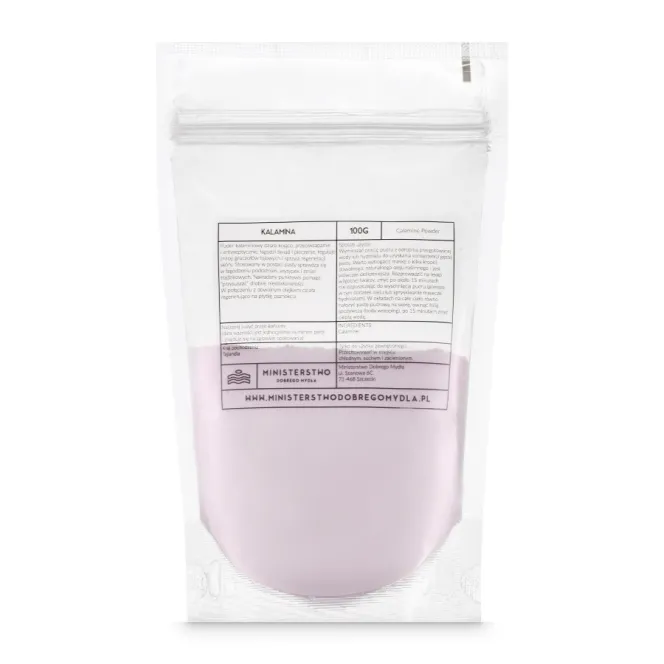
Calamine is one of the most interesting and at the same time lesser-known raw materials in Ministerstwo's range. It takes the form of an odourless, very fine powder with an exceptionally pleasant, almost fluffy texture. From a chemical point of view, calamine is a mixture of zinc carbonate with a small addition of iron oxide, which gives calamine its slightly pink shade. This combination of pinkness and fluffiness makes us think of marshmallows every single time ;)
Calamine powder can be obtained in two ways - by grinding naturally occurring minerals called smithsonite and hemimorphite (the latter, in powdered form, used to be called calamine) or through technological synthesis, which is what is used industrially today. Both mineral-derived calamine and the technologically synthesised one are classed as vegan ingredients that do not cause allergies. Ministerstwo's calamine comes from India - we pack it for you in resealable sachets holding 100 g of powder, and we also add it to our cult Lavender Soap, in whose INCI list you will find it under the name Calamine.
How does calamine work on the skin?
The medicinal and cosmetic properties of calamine were known and used as far back as antiquity. Applied externally to the skin, it has a multi-track soothing effect:
- it calms irritation,
- it effectively relieves itching and burning,
- it reduces skin redness,
- it supports the regeneration processes of the epidermis.
Today we know that it owes these effects largely to the antihistamine properties of zinc. Zinc inhibits the activity of histamine - the substance responsible for the reaction of tissues to inflammation arising in the body, which manifests itself, for example, precisely as a feeling of itchy skin. As an adsorbent, calamine also has an astringent and mattifying effect, regulating the work of the sebaceous glands and absorbing excess sebum, which makes it an ingredient that helps reduce imperfections.
The use of calamine in medicine and cosmetics
Although calamine in the form of a lotion, that is a liquid solution for topical use, is listed on the World Health Organization's WHO Model Lists of Essential Medicines in the section covering substances with an anti-inflammatory and anti-itch action, in Poland it is not registered as a medicine. It is, however, used as a cosmetic ingredient in products with a wide range of purposes.
The soothing properties of calamine are used in preparations that relieve itching and irritation of various origins - including mild sunburn, insect bites, contact rashes, abrasions and even the side effects of hair removal. Its adsorbent action and its ability to soothe irritation (often caused by imperfections), in turn, make calamine an excellent ingredient in cosmetics for combination, oily and acne-prone skin, as well as in spot application for "drying out" imperfections.
Did you know: Among the countries where calamine is classified as a medicine are the United Kingdom and the United States. Calamine lotions there belong to the group of OTC (over the counter) medicines, that is those sold without a prescription - you can buy them straight away even in supermarkets. The most popular uses of such preparations include relieving the symptoms of chickenpox and treating contact allergic reactions caused by plants native to the United States commonly known as poison oak and poison ivy.
Calamine is also added to cosmetic formulas as a base ingredient - its physical properties make it an excellent opacifier and moisture absorber. For this reason it is often used in colour cosmetics in pressed, baked or loose form (in powders, for example), making it possible to extend their shelf life. Returning for a moment to our lavender soap, the calamine in its composition not only enriches its caring properties but also helps us achieve a wonderfully pastel shade of purple and a pleasantly creamy lather.
How to use calamine in skincare?
Depending on how you use it, the contents of one sachet of Ministerstwo's calamine will last from several to as many as several dozen applications. In skincare you can use calamine in two forms:
- add it in powder form to a single portion of a ready-made cream, mask or body lotion, and also to the bath as a soothing powder (in which case you need to rinse very thoroughly with water before getting out of the tub, so that no whitish residue is left on the skin :)),
- mix it with a little water or a hydrolate of your choice until you get the consistency of a thick paste, and then apply it as a face mask, a body compress or a spot treatment for imperfections.
For those struggling with irritated and reddened skin we recommend combining calamine with linden, chamomile, immortelle or rose hydrolate. Owners of combination or oily skin with imperfections, on the other hand, will get the best results using calamine together with witch hazel, lavender, rosemary, bay laurel, mint or pine hydrolate.
Just as with clay masks, adding a few drops of oil will help prevent the paste prepared this way from drying out on the surface of the skin and thus "pulling" precious moisture out of the epidermis. For this role we particularly recommend our beloved, light and universal emollients: sugarcane squalane and raspberry seed oil, which effectively reduce transepidermal water loss, raise the skin's hydration level and reduce sebum production.
Important! Do not use metal containers or stirrers to mix calamine (or clays) - we use utensils made of plastic, glass, wood or natural stone.
Wishing you all things pink!
Products from this article:

 4.9 / 42
4.9 ( 42 RATINGS )
4.9 / 42
4.9 ( 42 RATINGS )

Similar posts

2026-10-12
Hand Cream Ingredients - What Works and What's Best Avoided?
Your expert guide to the INCI list: discover moisturising, regenerating and protective ingredients, and learn which substances are…
Read more
2026-02-20
What is the skin microbiome and why is it worth caring for its balance?
Did you know that millions of microorganisms live on your skin and look after its health and appearance every single day? This is the skin…
Read more
2025-04-24
Glycation and sugars in cosmetics - why it is better to use a sugar serum than to eat sugar?
Do you know this sweet irony? The sugar that ruins your skin from within can be its greatest ally in cosmetics! Discover the surprising…
Read more