





 ACCOUNT



HYDROLATS - minimalist, multifunctional, natural care for everyone
Contents
- What are hydrolats? In a nutshell...
- To begin with - a curiosity!
- What to look for when choosing a hydrolat?
- Let's check the composition!
- Only "Flower Water"?
- Preservatives are not so scary :)
- Leuconostoc/Radish Root Ferment Filtrate
- What else besides the preservative?
- Ask the manufacturer...
- How are our organic hydrolats made?
- The finest craft
- Steam distillation
- Simplicity = quality
- A curiosity:
- One bottle of hydrolat - many uses
- Use it as...
- Toner/mist for face and body
- Morning and/or evening
- A base for oil/cream
- Make-up removal
- DIY masks
- Not only face and body :)
- Hair oiling
- Scalp treatment
- Excessive oiliness, dandruff, irritation
- Sensitive, dry and irritated scalp
- Get to know our bestsellers!
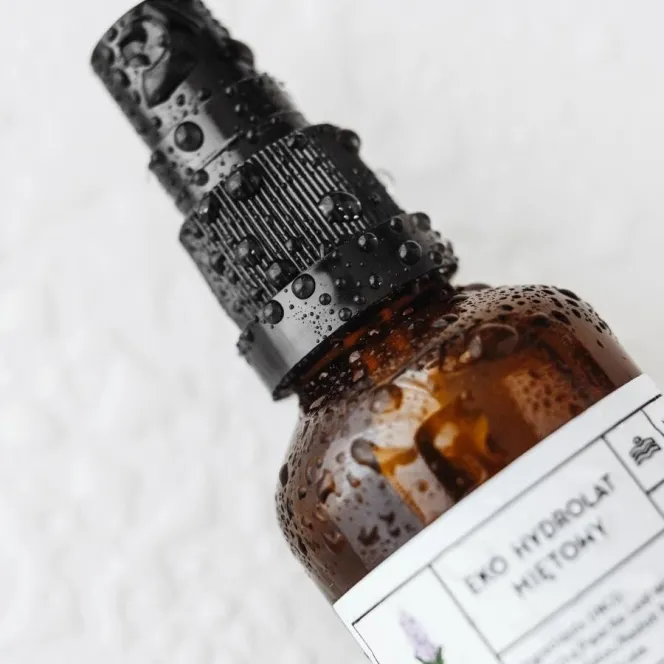
What are hydrolats? In a nutshell...
Hydrolats are natural, concentrated herbal or (most often) floral mists, a wealth of the active substances present in the plant they were prepared from. Once considered waste, a by-product obtained during the production of essential oils, today they are widely used in skincare and win hearts with their beneficial properties and an ever-growing range of uses.
Perhaps you have never thought of hydrolats as an essential skincare product, or perhaps you simply have not had the chance to get to know them properly yet? We are going to change that, come along :).
To begin with - a curiosity!
Distilling plants is not a modern art. As early as 2600 BC the Egyptians boiled plant material in huge cauldrons covered with shorn sheep's fleece or heavy cloth. The wool absorbed the aromatic mist, the fleece was then wrung out and this is how aromatic substances were obtained, used for example in perfumery.
What to look for when choosing a hydrolat?
Let's check the composition!
If you care about a high quality cosmetic, look in the product's ingredient list (under the heading "Ingredients") for the phrases "Flower/Leaf/Stem Water", preceded by the Latin name of the plant the hydrolat was prepared from, for example Rosa Damascena Flower Water.
Only "Flower Water"?
Not always :). Pure, organic hydrolats are susceptible to the unfavourable action of many external factors (such as light, temperature, microorganisms) - distillates without the addition of substances protecting them from these outside influences usually have a shorter shelf life and should be stored in the fridge.
Preservatives are not so scary :)
Gentle preservatives suited for use in natural cosmetics extend the shelf life of hydrolats and protect them from the external factors mentioned above. We enrich our mists with antibacterial peptides obtained in the process of fermenting radish root.
Leuconostoc/Radish Root Ferment Filtrate
With the help of lactic acid bacteria (Leuconostoc kimchi), a radish ferment and peptides with a broad spectrum of action are created - they protect against microorganisms and, on top of that, have wonderful care properties! They raise the skin's hydration level, soften it and soothe irritation :). The preservative is vegan and holds an Ecocert certificate.
What else besides the preservative?
It is worth paying attention to the packaging (dark glass protects well against sunlight) and the dispensing element - an atomiser or pump will greatly limit the hydrolat's contact with impurities from outside :). You will buy our organic hydrolats in pharmaceutical bottles of amber glass, and an atomiser will make dispensing easier :).
Ask the manufacturer...
...and they will tell you the truth! Giving the full composition of a cosmetic on its packaging is an obligation - if, however, you have doubts about the quality of the product you are buying, do not be afraid to ask the manufacturer about how the raw material is sourced, produced or certified :).
How are our organic hydrolats made?
The finest craft
Our hydrolats are made for you by a family of wonderful French craftspeople. In a paradise overgrown with lush greenery, far from pollution and noise, lies their family organic plantation, where every plant is cared for from sowing, through the harvest, to the distillation process at the end. Properly prepared, carefully selected plant material subjected to steam distillation yields a distillate that is the essence of what is most precious in plants.
Steam distillation
Hydrolats are created in the process of obtaining essential oils - initially they were considered waste, but fortunately that trend has changed :). Today hydrolats are one of the most sought-after natural raw materials - they are a wealth of active ingredients coming from the plants they are obtained from.
Steam distillation is a process in which steam is passed through plant material (petals, twigs, stems). The steam "carries off" the volatile plant components, and then, after cooling, condenses and separates into a water phase (the hydrolat) and a water-insoluble one (the essential oil).
Simplicity = quality
An undeniable advantage of obtaining hydrolats and essential oils by steam distillation is its simplicity and the absence of any need for additional solvents - all you need is water and plant material :). And the equipment ;).
A curiosity:
Our friendly distillery prepares hydrolats for you at a concentration of 2:1 and 1:1 - what does that mean in practice? For 1 litre of hydrolat there are as much as 2 kg (in the case of linden and witch hazel 1 kg) of plant material, which in turn means that the amount of beneficial active substances contained in the finished hydrolat is really high :).
On our side we add a little radish ferment to the hydrolats (you can read a bit more about it below ;)) and, prepared this way and sealed in glass pharmaceutical bottles, they make their way to your homes :).
One bottle of hydrolat - many uses
Well-chosen, good quality hydrolats will successfully replace several products in your routine - they are ideal for people who value minimalism, simplicity, effectiveness and closeness to nature :).
Use it as...
Hydrolats can successfully take on the role of:
- a toner,
- a refreshing face and body mist,
- a base for face serum/oil/cream,
- an addition to DIY clay masks,
- a compress for tired eyelids,
- a base for hair oiling, a scalp treatment,
- a spray that makes hair easier to comb.
Toner/mist for face and body
Hydrolats are most often used in facial skincare - they are an ideal, natural way to cleanse, refresh and moisturise the skin. They also work well as a base for an oil or cream.
A slightly acidic pH (close to the pH of facial skin) makes hydrolats the ideal product for toning the skin - they soothe irritation, reduce redness, regulate sebum production and leave the skin refreshed and soft to the touch.
How to use? Spritz your skin with the hydrolat and leave it to dry, or wipe the skin with a cotton pad or a clean cloth/towel.
Morning and/or evening
After cleansing the skin, to complete our facial routine, we reach for a cream or an oil/serum. It is not without reason that we recommend using hydrolats at this stage as well :).
Applying oils to damp skin:
- has a positive effect on how far they go (a drop or two is enough),
- makes application easier,
- reduces the risk of potentially clogged pores.
Win-win :)
Together with a cream
Applying a cream to skin dampened with hydrolat will not only make it easier to spread, but will also thin out formulas that are too heavy and boost the product's moisturising effect. Another win :).
A base for oil/cream
How to use? Spritz cleansed skin with hydrolat and apply a cream or a few drops of your favourite oil to the skin dampened this way. Then gently massage or pat it in until fully absorbed :).
Make-up removal
If you use a milk, micellar water or gel, after rinsing them off reach for a hydrolat to restore the skin's natural pH and prepare it for an oil or cream :).
DIY masks
Homemade masks, especially those based on dry clays, need to be mixed with a liquid (most often we do this by mixing the clay with water). If we use a hydrolat instead of water, though, it will enrich the mask with nourishing properties :).
How to use? Add a little hydrolat to the portion of clay prepared in a bowl and mix until you get the consistency of a thick paste. Apply to the skin and leave for about 10-15 minutes. Remember that a clay mask should not dry out on the skin! It needs to be dampened, and here again the hydrolat comes to the rescue ;). Dampening the clay prevents excessive tightness and dryness of the epidermis - once the mask is washed off, we can enjoy a radiant, nourished complexion :).
Not only face and body :)
Beyond their "standard" uses, hydrolats also work well in hair care and do a really good job there :). They strengthen the follicles, soothe an irritated scalp, add shine to the hair and make it easier to comb.
Hair oiling
A must for every hair enthusiast :). Thanks to oiling, hair becomes nourished, smoother and full of shine, and applying oil to damp hair (although a little more time-consuming) will bring even better results (including moisturising ones :)).
How to use? Spray dry hair with your chosen hydrolat from the roots all the way to the ends. Apply oil or conditioner to the dampened hair, wrap it in a cap and leave for fifteen minutes to an hour or so. Then wash your hair as usual :).
Scalp treatment
Staying with the subject of hair, hydrolats also work as a regenerating, moisturising and soothing scalp treatment. This strengthens the hair follicles, so that hair grows healthier, stronger and shinier :).
How to use? Best on a cleansed scalp. Simply spray the hydrolat at the roots and give yourself a gentle massage with your fingertips - the massage will stimulate circulation and help distribute the product better.
Excessive oiliness, dandruff, irritation
Which hydrolat to choose?
Lavender, witch hazel, pine, bay laurel, rosemary, mint.
The hydrolats listed above regulate the work of the sebaceous glands and sebum production - used as a scalp treatment they will help skin that becomes excessively oily and will soothe the symptoms of dandruff and scalp irritation.
Sensitive, dry and irritated scalp
Which hydrolat to choose?
Rose, witch hazel, linden, immortelle, chamomile
Hydrolats of rose, linden, witch hazel or Italian immortelle beautifully moisturise a dried-out scalp, soothe it and regenerate it intensively. They strengthen the hair follicles, so that hair grows stronger, healthier and falls out less.
Finally, we will just add that each of the hydrolats also works as a mist that makes hair easier to comb ;). So use them as your needs dictate!
Get to know our bestsellers!
Organic damask rose hydrolat
This pleasantly scented floral distillate can be used to care for every skin type, with particular emphasis on mature, tired and couperose skin as well as dry, sensitive skin prone to irritation. Rose hydrolat is our long-standing bestseller - it can be used to cleanse the face in the morning, it calms, soothes and moisturises, improving the overall look of the skin. It supports skin regeneration, gently firms, softens and smooths, and also soothes puffiness and redness.
Organic linden hydrolat
A gentle, delicately scented hydrolat distilled from linden flowers, it works well in the care of every skin type, and especially dry, sensitive and delicate skin (including atopic), as well as couperose and irritated skin. It refreshes pleasantly, tones, leaves the skin moisturised and evens out its complexion. It soothes the itching associated with dryness, bringing relief and improving the condition of the skin. It softens and smooths hair.
Organic witch hazel hydrolat
An intense witch hazel hydrolat that soothes irritation, regulates sebum production and has antibacterial properties - one of the best distillates for anyone with skin prone to irritation, couperose, oily skin or skin struggling with blemishes. It supports the regeneration of the epidermis, refreshes, nourishes, calms and soothes irritation, reducing redness of the skin.
Products from this article:

 4.9 / 46
4.9 ( 46 RATINGS )
4.9 / 46
4.9 ( 46 RATINGS )


- BESTSELLER


- Out of stock


Similar posts

2026-10-12
Hand Cream Ingredients - What Works and What's Best Avoided?
Your expert guide to the INCI list: discover moisturising, regenerating and protective ingredients, and learn which substances are…
Read more
2026-02-20
What is the skin microbiome and why is it worth caring for its balance?
Did you know that millions of microorganisms live on your skin and look after its health and appearance every single day? This is the skin…
Read more
2025-04-24
Glycation and sugars in cosmetics - why it is better to use a sugar serum than to eat sugar?
Do you know this sweet irony? The sugar that ruins your skin from within can be its greatest ally in cosmetics! Discover the surprising…
Read more