





 ACCOUNT



Hydrosol - what is it and how to use it in your daily facial care routine?
Contents
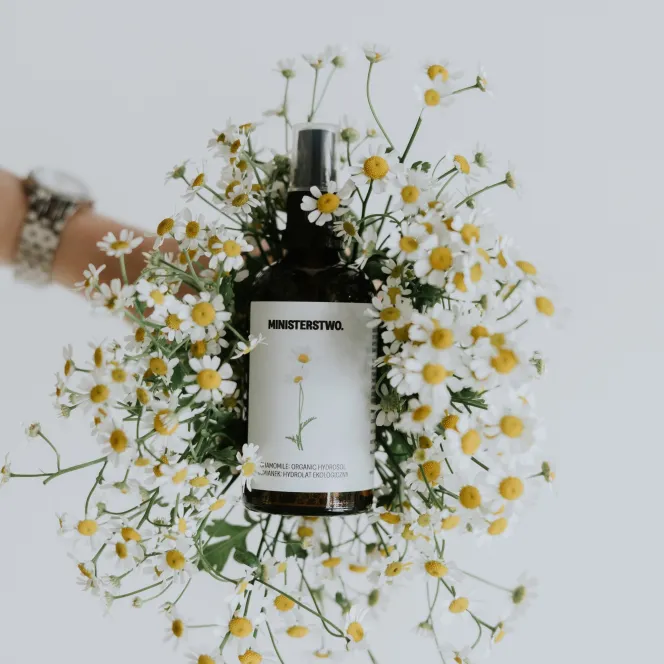
You've probably spotted a small glass bottle with a spray nozzle more than once and wondered what's actually inside. Hydrosol. A word that sounds a little mysterious. If you've been steering clear of hydrosols because you weren't sure why you'd use them - this post is for you. We explain what a hydrosol is, how its properties differ from a toner and an essence, why toning is a skincare step worth keeping, and how to use a hydrosol in your daily routine so you genuinely feel the difference.
Hydrosol - what is it? A definition that explains everything
A hydrosol is floral water left over from distillation - a by-product of extracting essential oils. When steam is passed through plant material (petals, twigs, leaves, stems), the distilled essential oil rises to the surface, while all the water-soluble active compounds from the plant remain in the water. That is the hydrosol.
For years it was treated as waste. Today it's one of the most sought-after ingredients in natural skincare and so-called "clean beauty".
A hydrosol is not water with added fragrance. It's a true, concentrated plant distillate, rich in active compounds: organic acids, flavonoids, tannins and aldehydes. These ingredients are present in exactly the proportions nature intended - nothing synthetic, nothing unnecessary.
Ministerstwo hydrosols are made by a family of French artisans on an organic plantation far from pollution. Every plant is looked after from sowing through harvest to distillation. We enrich them with an Ecocert-certified radish ferment, which plays a double role here: it's a natural preservative and it also boosts skin hydration.
Hydrosol or toner - what's the difference?
This question comes up regularly, and rightly so - both products look similar, sit side by side on shop shelves and are used at the same point in your routine. The main job of both is to restore the skin's proper pH. Despite the similarities, they're not quite the same thing. Discover the key differences between a hydrosol and a facial toner.
Toner is a broad term. It usually has a more complex formula. It may be water-based and contain active ingredients, acids (AHA, PHA), niacinamide, plant extracts, preservatives and fragrances. Its action is usually targeted and stronger, e.g. moisturising, exfoliating, brightening or mattifying.
Hydrosol, on the other hand, is uniform by nature - those offered by Ministerstwo contain literally two ingredients: plant distillate water and a natural preservative. No fillers, no artificial fragrances. The scent of a hydrosol comes solely from the plant itself - authentic, sometimes dry, sometimes subtle and "alive". A hydrosol works gently, and its effects vary depending on the plant it's made from - more on that in a moment.
To sum up: hydrosol or toner? One doesn't rule out the other, but if you value a short ingredient list and a minimalist routine - the hydrosol wins. If you're after stronger action and more active ingredients - reach for a toner.
Why tone your skin at all? It's all about pH
Human skin naturally has a slightly acidic pH of around 4.5-5.5. This is what keeps the skin's hydrolipid barrier working properly, protecting it from bacteria, fungi and harmful external factors.
The trouble starts when you wash your face. Water has a pH close to neutral or slightly alkaline (7-8). Many soaps - especially conventional ones - are alkaline, often at a pH of 9-10. After every wash, the skin needs time to rebuild its acidic protective mantle. The longer this takes, the more prone the skin is to irritation, excess sebum production (as a defence reaction) and moisture loss.
This is where a hydrosol comes in. Its pH ranges from 3.5 to 5.5 - exactly where your skin naturally should be. Applied straight after cleansing, it will:
- restore your skin's proper pH,
- seal the hydrolipid barrier,
- prepare your skin to absorb the next steps (serum, oil, cream) - boosting their effectiveness and helping products absorb properly,
- deliver its own active ingredients,
- hydrate and soothe your skin right from the start.
In other words - toning isn't a gimmick. It's a logical, well-founded step that makes the rest of your routine work better and allows the natural hydrolipid barrier to function properly, protecting the skin from harmful external factors.
How to use a hydrosol step by step
A facial hydrosol is incredibly versatile - and that's its greatest strength. It's not a one-off product tied to a single moment of the day. It's a tool you can reach for several times a day, in many different ways. Here are a few interesting ways to use it.
Step 1: Right after cleansing - toning
This is the classic and most important use. After washing your face (with water, a gel, an oil or micellar water), your skin needs a moment to calm down and rebalance its pH. Support it with a hydrosol.
Dispense a few pumps into your palms and gently press them onto your face, or mist your face from a short distance. Don't rub. Let it absorb slightly or apply the next step right away - slightly damp skin absorbs oils and oil serums better.
Step 2: Daytime mist - hydration and refreshment
Natural facial hydrosols are so gentle and lightweight that you can reach for them literally any time of day. A few spritzes while working at your computer, on the go, or after a few hours in an air-conditioned office - it's an instant reset for your skin.
Skin exposed to heating, air conditioning, dry air and stress loses water throughout the day. A hydrosol mist won't replace your moisturiser, but it will effectively top up hydration between skincare steps and leave you feeling fresh without smudging your makeup (as long as you apply it gently from a distance).
Step 3: A base for oil or serum
This is a use that especially delights anyone who includes oils and oil serums in their skincare routine.
Apply the hydrosol, don't pat it dry, and within a few dozen seconds (while your skin is still slightly damp) apply a few drops of oil or serum. You'll feel the difference immediately - the oil absorbs faster, leaves no greasy film and works more deeply.
This technique is one of the foundations of minimalist yet effective skincare. Simple and effective - just the way we like it :)
Step 4: A base for clay masks
Got clays or a powder mask in your drawer? Instead of mixing them with ordinary tap water, use a hydrosol. Your mask gains extra active benefits (the hydrosol's ingredients penetrate the softened epidermis beneath the mask), and its texture becomes silkier.
Pro tip: you can also use a hydrosol to moisten clay masks once they're on your skin - this keeps the mask from drying out too quickly, preventing excessive tightness and dryness of the skin.
Step 5: Hair care
Hydrosols can also be used to care for your hair, scalp and facial hair. These unassuming mists do a fantastic job of strengthening hair, making it easier to style and soothing scalp concerns. They're also great for beard care - rosemary hydrosol works brilliantly here.
You can use a hydrosol as a base for hair oiling. Mist dry hair with your chosen hydrosol from roots to ends. Apply oil or conditioner to the dampened hair, cover with a cap and leave on for anywhere from 15 minutes to an hour. Then wash your hair as usual.
You can also use a hydrosol as a scalp tonic. Using an atomiser, mist the hydrosol onto a clean scalp at the hair roots. Gently massage with your fingertips - the massage helps distribute the product, stimulates microcirculation, strengthens hair follicles and helps your hair grow healthier, stronger and shinier. This tonic can also soothe irritation and scalp concerns.
Natural facial hydrosols - which one to choose?
Choosing a hydrosol really means choosing the plant it comes from - because that's what determines how it works. Below you'll find a short guide to each of our hydrosols:
- Damask rose hydrosol - for all skin types, especially mature, couperose-prone and dry skin. Hydrates, gently firms, evens out skin tone and regenerates. The classic of classics.
- Lavender hydrosol - for irritated and sensitive skin, but also oily and blemish-prone skin. Soothes, cleanses and regulates sebum. Perfect for the evening.
- Roman chamomile hydrosol - for sensitive, dry and delicate skin. The gentlest of the whole family, wonderful for reactive and atopic skin.
- Linden hydrosol - for dry, sensitive, couperose-prone skin that irritates easily. Calms, hydrates and soothes redness.
- Witch hazel hydrosol - for oily, acne-prone and couperose-prone skin. Cleanses, tones and minimizes enlarged pores.
- Rosemary hydrosol - for oily and combination skin. Antibacterial, regulates sebum, boosts hydration and prevents shine.
- Immortelle hydrosol - for acne-prone, allergic and blemish-prone skin. Soothes, firms and reduces blemishes.
- Pine hydrosol - for oily and blemish-prone skin. Refreshes, cleanses and evens out skin tone.
- Peppermint hydrosol - for all skin types, especially tired skin. Cools, refreshes and hydrates - indispensable in summer and whenever your skin feels heavy.
- Bay laurel hydrosol - for all skin types, especially oily and problematic skin. Refreshes, tones, soothes redness and hydrates beautifully.
- Geranium hydrosol - for dry, sensitive, irritated, combination, oily and blemish-prone skin. Relaxes, calms, soothes redness and irritation, and reduces the appearance of blemishes and sebum production.
FAQ: The most common questions about hydrosols
Can I use a hydrosol every day?
Yes, without limits. Hydrosols are gentle enough to use twice a day (morning and evening) and also as a facial mist throughout the day.
Can a hydrosol replace an acid toner?
Not if you're after an exfoliating effect or active tone-evening. A hydrosol and an acid toner are different products. If you use an acid toner, you can apply it instead of a hydrosol or after it, depending on the order of your routine.
How should I store a hydrosol?
In a cool, shaded place. Our hydrosols come in glass bottles that protect the contents from light. If you can, keep them in the fridge in summer. A chilled hydrosol gives an extra boost of freshness on hot days.
Is a hydrosol safe during pregnancy?
The vast majority of hydrosols are safe during pregnancy, but - as with any cosmetic - it's worth discussing your current skincare with your doctor.
Summary
A hydrosol is one of those products that simply joins your skincare routine and stays there for good. Gentle, natural, versatile - and importantly, never overwhelming. It fits both an elaborate multi-step routine and a "minimum effort, maximum results" philosophy.
If you're looking for a product that restores pH after cleansing, hydrates throughout the day, preps your skin for oil and does it all 100% naturally - a hydrosol is exactly that.
This post is for educational purposes. The products available in our shop are cosmetics, not medicinal products. If you have dermatological concerns, please consult a dermatologist.
Products from this article:

 5.0 / 11
5.0 ( 11 RATINGS )
5.0 / 11
5.0 ( 11 RATINGS )


- BESTSELLER


Similar posts

2026-10-12
Hand Cream Ingredients - What Works and What's Best Avoided?
Your expert guide to the INCI list: discover moisturising, regenerating and protective ingredients, and learn which substances are…
Read more
2026-02-20
What is the skin microbiome and why is it worth caring for its balance?
Did you know that millions of microorganisms live on your skin and look after its health and appearance every single day? This is the skin…
Read more
2025-04-24
Glycation and sugars in cosmetics - why it is better to use a sugar serum than to eat sugar?
Do you know this sweet irony? The sugar that ruins your skin from within can be its greatest ally in cosmetics! Discover the surprising…
Read more