





 ACCOUNT



Does natural always mean better? Everything worth knowing about natural cosmetics.
Contents
- A natural cosmetic - what is its definition?
- So how can we be sure that a cosmetic described by its manufacturer as natural really is natural?
- Are natural cosmetics better than others?
- Do natural cosmetics work?
- Can natural cosmetics cause allergies?
- What to choose - dermocosmetics or natural cosmetics?
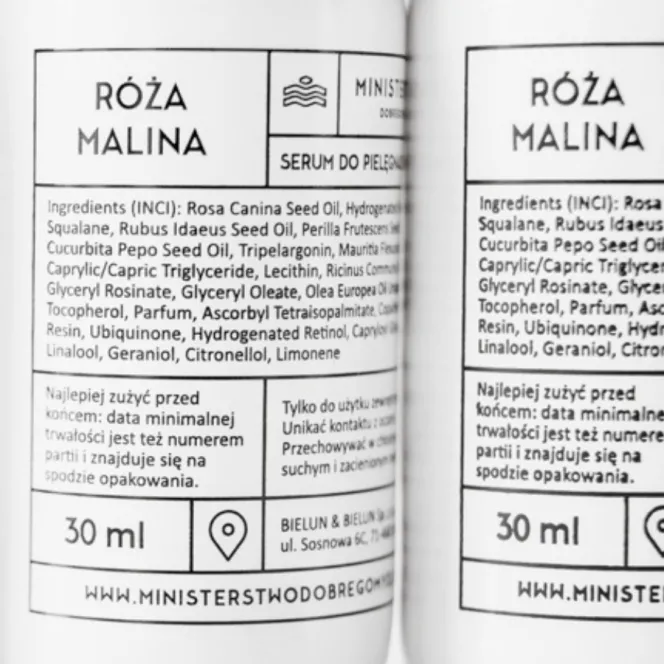
In recent years the cosmetics industry in Poland has seen a sharp rise in consumer awareness. Over time you have become better and better at deciphering ingredient lists, you pay more attention to the labelling on packaging and you expect transparency from manufacturers. More and more often, everyday care products are also expected to be not only effective but also in line with the user's outlook and lifestyle, which is why you happily go for natural ones. But what are natural cosmetics, and are they really the best choice for everyone?
A natural cosmetic - what is its definition?
We may surprise you with this, but there is no legal definition of a natural cosmetic - neither at national nor at EU level! All we have at our disposal are the guidelines of the Cosmetic Products Experts at the Council of Europe's Public Health Committee (ESCOP), according to which a natural cosmetic should care for the skin using natural substances and be friendly to skin and environment. Its formula should be based on ingredients of natural origin, obtained through physical, microbiological or enzymatic processes, and should not contain synthetic substances or ones obtained by chemical methods. These guidelines are not binding for cosmetics manufacturers, however, and are a matter of convention.
So how can we be sure that a cosmetic described by its manufacturer as natural really is natural?
In legal terms, information about a product's naturalness is what is known as a marketing claim, and that is already subject to European Union regulations and must meet a series of criteria. Commission Regulation (EU) No 655/2013 of 10 July 2013 laying down common criteria for the justification of claims used in relation to cosmetic products obliges manufacturers to be honest, to provide truthful information and hold evidence to support it, to ensure that all marketing claims comply with the law and with the facts, and to formulate them clearly so that consumers can make an informed purchasing decision.
In the case of cosmetics declared as natural, the evidence supporting such a claim is most often the so-called naturalness index, expressed as a percentage. The naturalness index is calculated according to the ISO 16128 standard established by the world's largest independent organisation creating international standards. In that standard we will find, among other things, definitions of a natural ingredient, an organic ingredient, an ingredient of natural origin, of organic origin and of synthetic origin. It is worth stressing here that natural and of natural origin are not the same thing!
- A natural ingredient is an ingredient derived from plants, minerals, microorganisms or animals, obtained through physical processes (for example by pressing), by extraction or fermentation (provided that the fermentation process and its product occur in nature), without chemical modification. Ingredients derived from fossil fuels, such as petroleum, are not considered natural.
- An ingredient of natural origin takes a form that does not occur in nature, obtained by chemical or biological methods that change its chemical composition, yet more than 50% of it still comes from natural sources.
Coming back to the naturalness index itself, it is calculated by assessing each ingredient of the product separately. In the case of Ministerstwo products, the percentage of ingredients of natural origin is given rounded to one or two decimal places. Depending on the product, you can check it in our online shop and/or directly on the packaging.
Please note! The naturalness of a cosmetic does not mean that it is a vegan, ecological or organic product - these are separate marketing claims that must be backed by meeting separate standards.
To make it easier for consumers to make an informed choice, various certificates confirming the naturalness of products also exist on the European market. A cosmetic obtaining such a certificate means that it has been checked, for a fee, by a private certifying organisation according to its own rigorous criteria and that it meets its high standards. The most recognisable organisation certifying natural cosmetics in Europe is the French ECOCERT, recognised in over 80 countries. According to ECOCERT standards, a natural cosmetic contains at least 95% ingredients of natural origin, and synthetic ingredients may not make up more than 5% of its content.
Now that we know what can genuinely testify to the naturalness of a cosmetic product, let us move on to the doubts that come up often.
Are natural cosmetics better than others?
To be allowed on the market within the European Union, every cosmetic must meet the safety and efficacy requirements imposed by the overarching legal act, that is Regulation (EC) No 1223/2009 of the European Parliament and of the Council of 30 November 2009 on cosmetic products. The manufacturer has a legal obligation to subject the cosmetic to a series of specified tests, to a rigorous safety assessment and to registration in the European Cosmetic Products Notification Portal (CPNP).
In legal terms, then, no group of cosmetic products can be singled out as better or worse, less or more safe than others. It all depends on the individual needs, preferences and lifestyle of the consumer.
Do natural cosmetics work?
Here the requirements for placing a cosmetic product on the market meet the regulations on marketing claims. A description of a cosmetic's properties is precisely such a claim - so its action must be proven by the manufacturer and consistent with what is declared. This is confirmed by one of the mandatory tests: application studies, in which volunteers (known as probands) assess how effectively the product works within its declared properties and any possible skin reactions to its use. The manufacturer may also subject the cosmetic to additional tests that are not required by law, for example instrument-based ones: specialist equipment then measures selected parameters of the skin's or hair's condition before the cosmetic is first used and after a specified period of regular use. What matters most to you is this: natural cosmetics do work, and there is concrete evidence for it.
Can natural cosmetics cause allergies?
Whatever the type of cosmetic - natural or not - we can never predict with a hundred percent certainty whether it will trigger an unwanted allergic reaction. Unfortunately, in theory absolutely anything can cause an allergy, even ingredients widely regarded as gentle on the skin. It is an enormously individual matter, depending among other things on the concentration of the substance the user is allergic to, how often it is used, and possible cross-reactions with other products.
At the same time it has to be said that natural ingredients, both plant-derived and animal-derived, are more common allergens than synthetic ones. That is why in our online shop you will find the following information in the description of every product: Our cosmetics are prepared from natural ingredients (sometimes enriched with a cosmetic fragrance) - in people allergic to individual ingredients they may cause allergic reactions. If an allergic reaction occurs, please stop using the product immediately and report the reaction to us at: [email protected]. We want to stress that we take this matter very seriously :)
While we are at it, we would also like to draw your attention to an important marketing claim: hypoallergenicity. Unfortunately this claim has no binding legal definition either, but manufacturers of cosmetics for the European Union market have at their disposal the Technical document on cosmetic claims agreed by the Sub-Working Group on Claims at the European Commission, which serves as a kind of collection of good practice. It specifies that the use of the claim "hypoallergenic" is justified only when the formula of the cosmetic product has been developed with a view to minimising its allergenic potential and does not contain substances that are known allergens. Such a cosmetic should also be tested on a representative group of probands with sensitive or allergy-prone skin. It is worth remembering, however, that minimising the risk does not equal a guarantee that no adverse effects will occur!
What to choose - dermocosmetics or natural cosmetics?
People prone to allergies or with very sensitive skin often decide on so-called dermocosmetics, which are wrongly associated with greater safety or effectiveness. What do you think, is there a legal definition of a dermocosmetic? At this point it is easy to guess that the answer is: no ;) By convention, the term dermocosmetics has come to be used for cosmetic products available in pharmacies, which are assumed to work in a way similar to medicines. Some sources also say that a dermocosmetic should be free of ingredients that can cause allergies and subjected to broader and more thorough testing, but this is purely a matter of convention - EU law does not distinguish between types of cosmetics, so all of them are subject to exactly the same regulations and requirements for being placed on the market. It is worth stressing here that a situation in which a medicinal product takes the form of a cosmetic is something entirely different - registering medicines is subject to completely different, more rigorous procedures!
In practice, then, what may set dermocosmetics apart are formulas developed to meet the needs of people struggling with specific skin problems or skin diseases, whose daily routine should be based on cosmetics supporting dermatological treatment. And so to the question "What to choose?" we can only give the classic answer: it depends ;) To make informed purchasing decisions, it is worth taking into account the condition of your skin, any allergies, individual preferences regarding the specifics of products (including ingredients or scent), as well as lifestyle and the values you hold (such as ecology or veganism). It is important, however, to verify whether marketing claims are justified and not to be guided by an unfounded fear of "chemical" ingredients. The vast majority of products on the market are partly natural and partly synthetic, just in different proportions - and chemistry is everything inside us and everything around us :)
Similar posts

2026-10-12
Hand Cream Ingredients - What Works and What's Best Avoided?
Your expert guide to the INCI list: discover moisturising, regenerating and protective ingredients, and learn which substances are…
Read more
2026-02-20
What is the skin microbiome and why is it worth caring for its balance?
Did you know that millions of microorganisms live on your skin and look after its health and appearance every single day? This is the skin…
Read more
2025-04-24
Glycation and sugars in cosmetics - why it is better to use a sugar serum than to eat sugar?
Do you know this sweet irony? The sugar that ruins your skin from within can be its greatest ally in cosmetics! Discover the surprising…
Read more