





 ACCOUNT



Micellar water - why is it worth using? We explain how to choose the best make-up remover for your skin.
Contents
- What is micellar water and how does it work?
- Why is it worth using micellar water for daily face cleansing? What are the advantages of this form of removing make-up from the face, eyes and lips?
- Micellar water for removing make-up - what are the possible drawbacks of using it?
- How to use micellar water correctly?
- Good micellar water - how will it be right for your skin type?
- When is it worth choosing micellar water and when a cleansing oil?
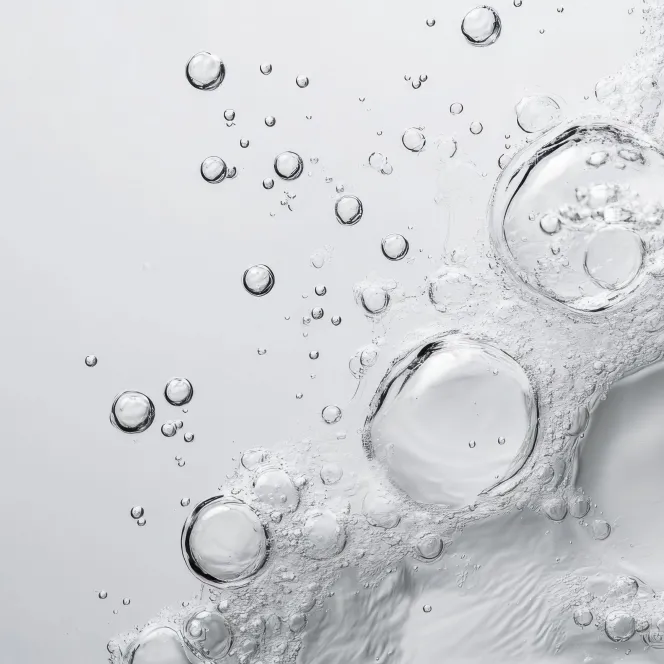
Wipes, balms and oils, milks, emulsions, mousses or jellies... The cosmetics market is full of all sorts of make-up removers with more or less elaborate names and formulas. Yet a significant number of consumers - both those using them in the comfort of home and those using them professionally - cannot imagine giving up "good old" micellar water. What does micellar water owe its popularity to and why is it effective? Let us take a closer look!
What is micellar water and how does it work?
Micellar water, also described as micellar liquid, is a water-based cosmetic containing particles called micelles, thanks to which it cleanses the skin and thoroughly removes make-up from the face, eyes and lips. Micelles are spherical particles of surface-active (cleansing) substances built of two parts:
- an outer, hydrophilic one, that is one that attracts water,
- and an inner, hydrophobic one - repelling water and attracting fat particles.
This molecular structure means that micelles have the ability to attract fatty impurities like a magnet into the centre of the particle, and to dissolve the remaining impurities in the water (drawn in by the outer layer of the particle). Thanks to this, a cotton pad soaked in micellar water effectively cleanses the skin of make-up, cosmetic residue and sebum, as well as sweat, dust, airborne pollutants and dead skin cells. Does that not sound like the perfect cosmetic for daily make-up removal?
Why is it worth using micellar water for daily face cleansing? What are the advantages of this form of removing make-up from the face, eyes and lips?
- Micellar water is a convenient form of removing make-up "on the go" - the act of removing make-up does not have to take place over a washbasin or a sink, or even in the bathroom. For this reason it is irreplaceable in the work of make-up artists and characterisers, and everywhere consumers can use make-up testers. It is also valued by people who, after a long day, happily combine removing their make-up with resting in a comfortable position :)
- Micellar water is the best cosmetic for partial make-up removal or small corrections - when we want to remove only part of the make-up, for example with a cotton bud soaked in it.
- Compared with other make-up removers, micellar waters are usually more economical - sold in relatively large volumes at relatively low prices.
- Micellar water is the best cosmetic for removing eye make-up - it does not require rubbing the delicate skin of the eyelids, it has less potential to irritate than cosmetics that foam (gels or mousses) and it does not leave the so-called mist on the eyes that oil-based make-up removers can cause.
- Used correctly, micellar waters do not irritate the skin or disturb its natural protective barrier.
- Because of their water formula (with the exception of two-phase micellar waters), they do not leave a greasy layer on the skin.
Micellar water for removing make-up - what are the possible drawbacks of using it?
- Unfortunately, our hands alone are not enough for cleansing the facial skin and removing make-up with micellar water; cotton pads are essential. Choosing this form of make-up removal therefore requires us not only to remember to have cotton pads with us at home and while travelling, but it can also be an unecological solution if we decide to use disposable cotton pads - depending on the make-up worn, each time we need from a few to well over a dozen of them! So if you are planning to buy micellar water, it is worth equipping yourself with a reusable cotton pad at the same time :)
- For people who remove make-up daily or even several times a day, micellar water is relatively uneconomical.
- It is no secret that fatty impurities (such as our own sebum, rich creams or highly covering, setting make-up products) are easiest to remove with a cleansing product whose formula is also based on fatty substances. Despite the two-phase structure of micelles, the water formula of the product may not cope with effectively removing heavier make-up or a more substantial cream with a high sun protection factor, especially a mineral one, as well as make-up removers based on oils and butters do.
- When micellar water is used incorrectly, regularly removing make-up with it can have a negative effect on the condition of the complexion, resulting in irritation, damage to the natural hydrolipid barrier and/or the appearance of blemishes. Why?
How to use micellar water correctly?
Micellar water is an extremely practical make-up remover, as long as we use it correctly - and, contrary to appearances, the right way to use micellar water is by no means obvious to many people! For micellar water to cleanse our skin effectively and serve its good condition, we need to remember two most important things.
Firstly, micellar water does not replace water - it is a cleansing cosmetic and we should think about it in exactly the same way as about cleansing milk, face wash foam, oil or gel. This means that unless the manufacturer states otherwise (which is relatively rare on the market), micellar water must be washed off the face after use! Make-up remover is only the first stage of cleansing; it does not replace the whole process. To put it more vividly, micelles "collect" impurities from the surface of the skin but hold them inside the particles. And those "capsules" full of impurities can stay on our skin until we rinse them off ;) That is why not rinsing off micellar water can result in blemishes.
(In real, imperfect life, though, one may wonder whether in a crisis it is better to go to sleep in full make-up or, all things considered, with micellar water left unrinsed on the face...?).
The second issue concerns how we handle a cotton pad soaked in micellar water. From experience we know that removing make-up with micellar water most often involves rubbing the face intensively with the pad, including circling on closed eyes. Brrr! Such an action will neither speed up the process of cleansing the face nor improve its effectiveness, and on top of that it puts the elasticity of our skin to the test and is strongly irritating for it. Let us return here to the structure and workings of micelles - we mentioned that micelles work like a magnet, attracting impurities and binding them inside the particles. This means that it is enough to press the pad soaked in micellar water to the surface of the skin and wait a few seconds to give the micelles time to work, and then gently move it to the next spot! When removing eye make-up we recommend holding the pad on the closed eyelid for a longer moment and then gently sliding it down along the lashes, which will help take the mascara off them. We do the same when removing make-up from the eyebrows, following the direction of hair growth :)
Good micellar water - how will it be right for your skin type?
The cosmetics market abounds in a wide spectrum of micellar waters. Among them you can find:
- single- or two-phase make-up removers (enriched with oils for more effective removal of heavy, long-lasting make-up, such as setting lipsticks),
- scented or fragrance-free liquids,
- enriched with additional care ingredients with all sorts of properties - moisturising, sebum-regulating, soothing, anti-inflammatory...
- with a lower or higher degree of naturalness,
- in different volumes and different price categories.
When choosing micellar water for yourself, it is therefore worth being guided not only by economic or ethical considerations and the type of make-up you use, but also (and in fact above all) by the current condition and needs of your skin. People with dry, sensitive skin will particularly appreciate micellar waters rich in moisturising ingredients such as glycerine, hyaluronic acid or aloe extract. In the care of oily, combination and blemish-prone skin, micellar water enriched with ingredients that regulate oiliness and have antibacterial properties will work well, such as niacinamide, rosemary extract or zinc. People prone to allergies or irritation should, as far as possible, choose fragrance-free micellar waters containing ingredients that soothe and calm irritation and redness - among others panthenol, allantoin, betaine or chamomile extract.
When is it worth choosing micellar water and when a cleansing oil?
Both types of make-up remover come in such varied forms, adapted to the needs of every skin type, that they can essentially be called universal - it is hard to point to specific situations in which one of them would be decidedly more advisable than the other! If, however, we were to make some general distinction...
A cleansing oil may be a better choice for people who use skincare products (such as sunscreens) and make-up with heavier, thicker, setting or waterproof formulas, especially silicone-based ones. We would also recommend it to people whose skin is sensitive or irritated and for whom even the gentlest contact with a cotton pad may irritate it further. Cleansing oils may also work better for people whose skin is strongly prone to oiliness and to so-called clogging - following the principle that fats are best dissolved by other fats! It is worth remembering, however, to choose cleansing oils with an emulsifier, which on contact with water turn into a milky emulsion and wash easily off the surface of the skin, leaving no greasy layer.
Micellar water, on the other hand, will definitely work better especially for people who need to remove make-up in conditions other than a home bathroom, as well as for all those who follow a minimalist skincare routine or wear very light make-up and do not need a make-up remover for special tasks. It will also be an excellent choice for those who need to touch up or change their make-up during the day.
We believe, however, that it is worth having both types of product in your collection! Using them is not mutually exclusive; in fact they can complement each other depending on your needs :)
Products from this article:

 5.0 / 40
5.0 ( 40 RATINGS )
5.0 / 40
5.0 ( 40 RATINGS )


Similar posts

2026-05-13
Hand cream - how to choose the best one for your skin? A complete guide
Our hands work for us non-stop - washing, detergents, air conditioning, frost, sun. And yet hand care is still often treated as an…
Read more
2026-05-13
Hand care: how to look after your skin and nails?
Hands give away your age faster than your face. Frequent washing, detergents, frost in winter and dry indoor air - all of it mercilessly…
Read more
2026-02-20
A daily care routine with micellar waters from Ministerstwo.
Micellar water is a must-have in skincare - but do you know how it really works and why it is worth reaching for every day? Discover the…
Read more